|
The Land of the Seven Moles
General Information
Oaxacan Cuisine, ancestral and baroque like the town itself, provides the traveler with yet another compelling reason to visit the region. Born from the union of Mesoamerican and Mediterranean tastes, it is an exotic mixture of flavors, aromas and colors rarely found in other places. The Mole (derived from the Nahuatl "Molli," meaning mixture) is a prime example. Mole is a rich sauce (frequently served over chicken) that often contains more than 32 ingredients, including several varieties of chiles, seeds, spices and chocolate. Families traditionally make their most celebrated Mole in November on the Day of the Dead, in honor of their ancestors. The dish is lovingly prepared according to treasured family recipes and then placed on the family altar in expectation of a visit from the souls of the departed. Mole is also a staple of the Oaxacan diet throughout the year, and is a common entree in Oaxacan restaurants and homes.
A traditional Oaxacan breakfast (desayuno) might consist of a cup of Atole (a thick sweet corn beverage) or chocolate and a piece of bread upon rising, and then a heartier breakfast (almuerzo) at 10 or 11 a.m. of eggs, beans, meat, tortillas and fruit. The "comida" or main meal is normally taken between 2 p.m. and 5 p.m., when most businesses close and workers return to their homes to eat with family or friends. Many places in the Zocalo will serve meals earlier (as well as later) in the day to folks who are still on different eating schedules. Some of the best regional meals and deals are to be found at this time. "Comida corridas" are often the most economical way to go, and consist of a full course meal complete with soup, "agua" or beverage of the day, and dessert. Prices range from about $12 to $50 pesos. Evening suppers or cenas are offered in the Zocalo as well as many restaurants, generally up until 11-12 p.m.
Regional Cuisine
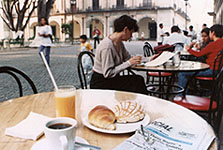
Oaxaca's Restaurants: In Oaxaca City, starting at the Zocalo, you will find several reasonably priced sidewalk cafes which serve regional dishes while you enjoy one of Mexico's most beautiful plazas. One block to the south is the Benito Juarez Market, where you can buy regional specialties such as: Quesillo (a salty Oaxacan string cheese), Tamales de Mole (steamed banana leaves with filling), and Chapulines (little fried grasshoppers prepared with salt and lemon). Legend has it (and experience has shown) that even one small mouthful of the famous chapulines will assure your return to Oaxaca.
Immediately south of the Juarez Market in an adjacent building is the 20 de Noviembre Market where there are innumerable cooking stands and small restaurants that are frequented by locals. Look for the ones with the most clientele, and you won't go wrong.
Mainly located in courtyard establishments called "Comedores Familiares", you can find tasty aperitifs, snacks (botanas), and the best regional dishes, in an atmosphere filled with plants and birds. These are generally smaller, family-owned restaurants that don't tend to advertise much, but that most locals know about anyway. A few to try are: El Sabino, La Vuelta, La Guelaguetza.
The most renowned restaurants serving regional Oaxacan Cuisine are: La Casita, Dona Elpidia, Maria Bonita, La Casa de la Abuela, El Topil, 8 Venado and El Biche Pobre among others. Oaxaca is also known for it's 12 inch tortillas called Tlayudas, prepared with asiento (pork grease), milled beans, vegetables and sauce, accompanying with Tasajo (a thin cut of beef) or Cecina (a thin cut of pork). These are served mainly in street stands. One of the most popular places to enjoy this specialty is on Libres St. (one block south of Abasolo). Open only at night, this is a great after hours stand where good conversation often accompanies the ample servings.
Mexican & Regional
Michoacan historian Luis Gonzales describes Mexican food as a "Wonderful Wedlock . . ." a happy union enriched by millenary cuisines that has influenced other Iberoamerican traditions. It is based in corn, chiles, beans or frijoles, all kind of meets and native vegetables. Each region has it's own variations. In Oaxaca, for example, there are 16 types of chiles that are not found anywhere else in Mexico. The most delicious restaurants serving Mexican and Regional food are: La Olla, El Naranjo, Santa Fe, Los Pacos, Hacienda de San Augustin, and Jardines del Lago among others.
International Influence
Oaxaca is a cosmopolitan city which boasts a number of fine restaurants serving international cuisine. Some specialize in Italian, French, Chinese, Argentine or Lebanese food only. Others serve a variety of dishes from all over the world. Among the best Italian restaurants and Pizzerias are Pizza Rustica, and Pizza Nostrana. For French cuisine we recommend Las Chayotes; for Chinese, Muralla or Casa Blanca, and for Argentinean, El Che Gaucho Argentine Grill. Other restaurants known for serving excellent international cuisine include: Los Cantaros, El Vitral , El Asador Vasco, El Catedral, Colibri, Madre Tierra, El Naranjo, El Sagrario and Hosteria de Alcala.
Vegetarian
Oaxaca is home to an incredible bio-diversity, and so one can take advantage of the many varieties of plants and vegetables, many of which are cultivated organically. If you're looking for healthy and natural food, try Manantial Vegetariano, Flor de Loto, La Abeja, and La Olla among others.
Seafood
Oaxaca has a significant coastline, and fresh fish arrives at least 3 times weekly to local markets and restaurants. Good seafood restaurants to try in Oaxaca include Marco Polo, Mariscos Los Jorges, Playa del Carmen, La Quebrada, Neptuno Mariscos, Mariscos La Red and Playa Cangrejo.
Beverages & Liquors
Shakes, fruit juices and drinks based in seeds or rice (like Agua de Horchata), in flowers (like Agua de Jamaica) or in natural fruits; or other Oaxacan specialties, mainly found in stands inside the Juarez Market as well as other city markets.
When the Chocolate (Xocoatl in Nahuatl) arrived to Europe, in the XVII century, it's consumption had to be regulated because of the commotion and addiction that it caused. Today you can taste a cup of good chocolate in almost any food establishment in Oaxaca.
Oaxaca is an important producer and exporter of Coffee. The plantations are situated at an altitude of 800 to 1200 meters above sea level, with a fertile soil and suitable climate, that gives it it's high grown coffee characteristics. The best Cafes in town are: Morgan's Cafe, Coffee Beans , Cafe-Cafe (with two branches), Madre Tierra (which also has a nice bakery), La Hipotesis, Cafe Antigua, Cafe Gecko, La Olla, Coffee Beans and all the sidewalk cafes found at the Zocalo.
Malcom Lowry made a eulogy to Mezcal in his novel "Under the Volcano," and thereby made it a famous liquor worldwide. John Houston's film converted it into a fashion. Mezcal is a word that comes from the Nahuatl -elt- that means Maguey (a plant in the Agave family and -izcaloa- that means to boil. The production process begins with the harvest of the plant, which must be allowed to mature for 8 to 10 years. Then the heart of the Maguey is cut and cooked for four days, mashed and mixed with water to begin the fermentation process. Sometimes the liquid is passed through a second distillation until finally it is ready for it's consumption or aging. Some of the best brands of Mezcal include De La Vega, Oro de Oaxaca, Encantado. You can also venture out to local villages like Mitla and taste many varieties of Mezcal.
Desserts
To top off a meal or indulge in a not-so-heavy snack between, try the frozen fruit bars sold by the chain of shops called "La Michoacana." Flavors like Watermelon, Coconut, Strawberry, Tamarind, or orange with chile, are among our favorites. For ice cream, don't miss the lovely outdoor stands in the courtyard of La Iglesia de la Soledad (Church of Solitude), which sell unusual flavors like Leche Quemada (burnt milk) or Tuna con Leche (a fruit of the nopal cactus).
The tradition of eating Bunuelos, (fried dough fritters with powdered sugar) is a popular one during fiestas in Oaxaca. One eats the bunuelo, and then throws the clay container that it is served on over his/her shoulder, at the same time as one makes a wish (that will surely come true if you come to this magic place)! Other tried and true desserts to try are flan, gelatinas, and fresh fruit served with honey. Dulces regionales (regional sweets and pastries) may be bought from street vendors or in bakeries. Some to try are: Empanadas, Borachos, Roscas, Mamones, Menguanito, Conserva de Calabaza, or de Higo.
 El Che Gaucho Argentine Grill El Che Gaucho Argentine Grill
 New, large, beautiful restaurant in Colonial Reforma New, large, beautiful restaurant in Colonial Reforma
Fresh, Argentine beef cooked over open fire
Homemade pastas, bread and desserts, hygienic salads & veggies
Large bar area with TV, smoking section, valet parking
corner Calle Las Rosas & Alamos, Colonia Reforma, Oaxaca * Tel: from U.S. + 52 (951) 514 2122
Flor de Loto
Regional Oaxacan & vegetarian restaurant recommended in several guide books.
Located just 2 blocks from the zocalo in downtown Oaxaca.
Comida corrida daily with both vegetarian & regular menu.
Different comida daily with fresh & hygenic ingredients; beer/wine/espresso.
Calle Morelos #509 Centro Historico, Oaxaca * Tel: from U.S. + 52 (951) 514 39 44
Restaurant Bar Hostería Alcalá
Lovely restaurant housed in 16th C Colonial building & patio
Regional Oaxacan Food with an international flair
Located just steps from Santo Domingo Cultural Center
Live music, romantic restaurant, fabulous food
Calle Alcala #307, Oaxaca * Tel: from U.S. + 52 (951) 516-2093
La Crepe Restaurant - Bar
Huge menu with dozens of savory and sweet crepes
Excellent location on Calle Alcala with view from balconies
Baguette & Croissant sandwiches served all day
Coffee drinks, full bar, beer & wine; friendly staff
Calle Alcala #307 Upstairs, Centro Historico, Oaxaca * Tel: from U.S. +52 951 516-2200
La Verde Aceituna
The only pure ovo-lacto vegetarian restaurant in Oaxaca.
Enjoy breakfast buffet or order a la carte; open from 7 a.m to 11-30 p.m. daily.
SUNDAY BRUNCH 2-5 p.m. Over 40 delicious dishes to choose from.
Located in Lovely Los Olivos Hotel & Spa.
Calzada Madero 1254, Oaxaca * Tel: from U.S. + 52 (951) 514 1946 * In Mexico: 01 800 202 0739
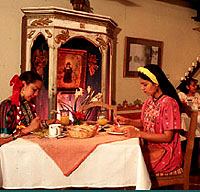
La Casa de la Abuela
Traditional Cuisine * Centrally Located
Ave. Hidalgo #116 * Tel: (951) 516-3544
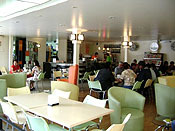
Cafe Nuevo Mundo - Roasters & Cafe
Fresh roasted, mountain grown coffee
Latte art, cappucinos, espresso, iced drinks, etc.
Great freshly baked goods and sandwiches
Located in downtown Oaxaca; great ambiance & music
Calle M. Bravo # 206 --- Tel: (951) 501-2122

|